

Most LMS replacements don’t happen because a platform stops working. They happen because the platform stops keeping up.
What once supported 100 students comfortably now creates bottlenecks across assessments, reporting, communication, and compliance workflows. Trainers spend more time managing administration. Reporting takes longer. Student expectations continue to rise.
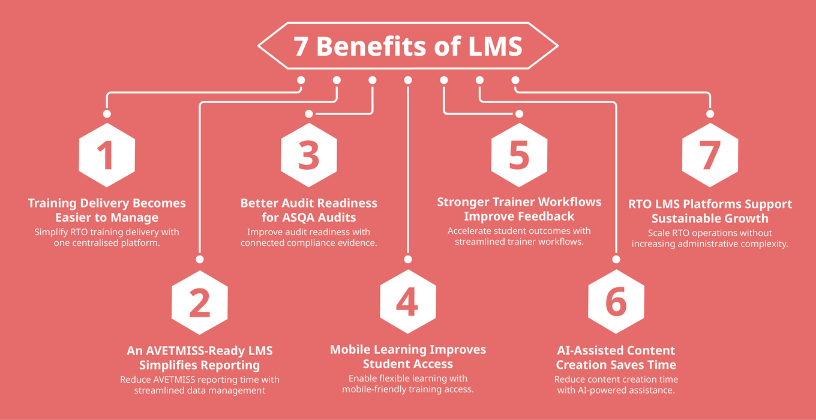
The key benefits of an LMS for RTOs include streamlined training delivery, simplified AVETMISS reporting, stronger audit readiness, flexible mobile learning, more efficient trainer workflows, AI-assisted content creation, and better support for sustainable growth.
These are the reasons more providers are evaluating the benefits of an LMS for RTOs in 2026. Not because LMS technology is new, but because the demands placed on Australian training organisations have changed. Modern RTOs need systems that support training delivery, compliance, student engagement, and operational efficiency at the same time.
- Why Australian RTOs Need an LMS in 2026
- Benefit 1: Training Delivery Becomes Easier to Manage
- Benefit 2: An AVETMISS-Ready LMS Simplifies Reporting
- Benefit 3: Better Audit Readiness for ASQA Audits
- Benefit 4: Mobile Learning Improves Student Access
- Give Nimbu a try!
- Benefit 5: Stronger Trainer Workflows Improve Feedback
- Benefit 6: AI-Assisted Content Creation Saves Time
- Curious about Michi?
- Benefit 7: RTO LMS Platforms Support Sustainable Growth
- The Real Value of an LMS in 2026
- Frequently Asked Questions
Why Australian RTOs Need an LMS in 2026
Australia’s vocational education sector continues to expand. According to the National Centre for Vocational Education Research (NCVER), there were around 4.6 million VET students enrolled in Australia in 2024, highlighting the growing demand for efficient, scalable training systems.
As student numbers grow and delivery models become more flexible, Australian RTOs are expected to maintain accurate records, meet compliance requirements, and deliver consistent learning experiences. Manual processes and disconnected systems make these expectations increasingly difficult to meet.
A modern learning management system helps centralise these activities, creating a more scalable approach to training delivery while reducing administrative burden.
Benefit 1: Training Delivery Becomes Easier to Manage
One of the biggest benefits of an RTO LMS is improved training delivery.
Without a structured platform, assessments, resources, communication, and observations often live across multiple systems. This creates inefficiencies for both trainers and students.
Nimbu centralises these activities within a single platform, helping training teams manage delivery more consistently while reducing administrative effort.
Benefit 2: An AVETMISS-Ready LMS Simplifies Reporting

An AVETMISS-ready LMS can significantly reduce reporting workload. Many RTOs still spend valuable time preparing exports, validating data, and checking records before submission. As student numbers increase, this process becomes more time-consuming.
Nimbu supports structured data management and streamlined AVETMISS reporting, helping teams spend less time preparing reports and more time focusing on students.
Benefit 3: Better Audit Readiness for ASQA Audits
Preparing for ASQA audits becomes easier when compliance evidence is connected to everyday delivery activities.
Rather than searching through emails, folders, and spreadsheets, teams can access assessment records, observations, feedback, and student activity from one system. This improves audit readiness while reducing the stress often associated with compliance reviews.
Benefit 4: Mobile Learning Improves Student Access

Modern students expect flexibility. A strong mobile learning experience allows students to access resources, assessments, and training materials from virtually anywhere.
Nimbu supports videos, SCORM content, PDFs, quizzes, and downloadable resources through a mobile-friendly environment, helping improve accessibility across different delivery models. This is particularly valuable for blended learning and remote training environments.
Benefit 5: Stronger Trainer Workflows Improve Feedback
Efficient trainer workflows have a direct impact on student outcomes. Delayed feedback, disconnected communication, and manual marking processes can slow progression and create frustration.
Nimbu’s Marking Dashboard helps trainers manage submissions, feedback, and revisions from a single location. This creates faster turnaround times and clearer communication between trainers and students
Benefit 6: AI-Assisted Content Creation Saves Time

One of the newer benefits of an LMS for RTOs is access to AI-assisted content creation tools.
Nimbu’s Michi AI Assistant helps trainers and content editors generate assessments, observations, articles, quizzes, and learning materials more efficiently. The benefit isn’t simply using AI. The benefit is reducing repetitive content creation tasks so trainers can spend more time supporting students and improving delivery quality.
Benefit 7: RTO LMS Platforms Support Sustainable Growth
A modern RTO LMS should help organisations grow without creating operational bottlenecks. As enrolments increase, manual workflows often become harder to manage. Communication, assessment tracking, onboarding, and reporting all require additional effort.
Nimbu supports scalable delivery through features such as Self-Served Courses, Class Activation workflows, Microsites, and streamlined student management processes. This helps RTOs expand delivery capacity without increasing administrative complexity at the same rate.
The Real Value of an LMS in 2026
The biggest RTO LMS benefits are not technical features. They are operational outcomes.
Better reporting. Faster feedback. Improved compliance visibility. More efficient delivery. Stronger student experiences. Greater scalability. As expectations continue to evolve, the right LMS becomes more than a training platform. It becomes part of the foundation that supports long-term growth.