
Student expectations continue to evolve, and so does the way they engage with training. Digital learning improves student engagement by combining interactive activities, diverse online learning resources, engaging eLearning content, instructional videos, visual learning, mobile accessibility, and AI-powered study support into one connected learning experience.
For Australian RTOs, multimedia is no longer simply an enhancement, it’s an essential part of creating training that captures attention, improves knowledge retention, and prepares students for real-world application. Rather than relying on text-heavy learning materials, Trainers can use videos, quizzes, podcasts, SCORM packages, interactive resources, and visual content to make learning more engaging and accessible.
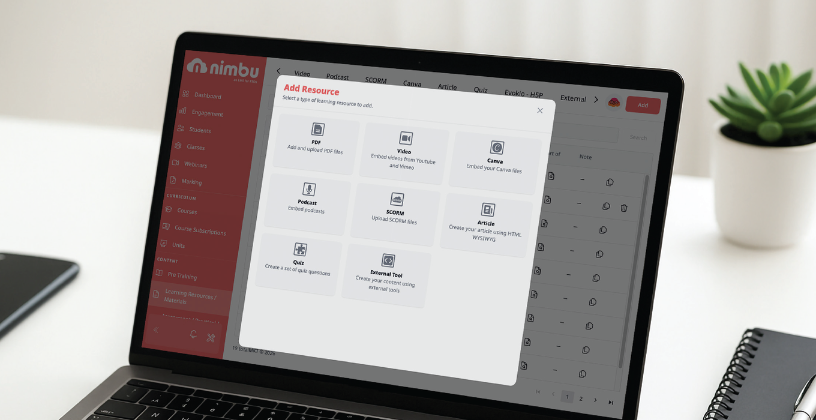
Nimbu supports this approach by allowing Trainers to build multimedia-rich courses using Videos, SCORM packages, PDFs, Podcasts, Articles, Canva resources, Self-Marking Quizzes, Learning Journey, and Microsites, while AI-powered tools help both Content Editors and students work more efficiently.
Here are seven ways multimedia is transforming digital learning in 2026.
Traditional Online Learning vs Modern Digital Learning
| Traditional Online Learning | Modern Digital Learning |
| Long blocks of text | Videos, Articles, Podcasts, SCORM and Canva resources |
| Passive reading | Interactive quizzes and knowledge checks |
| One content format | Multiple multimedia learning formats |
| Manual feedback | Instant feedback through Self-Marking Quizzes |
| Desktop-only access | Mobile learning through Microsites |
| Limited interaction | AI-supported revision and personalised study tools |
Modern multimedia doesn’t simply make courses more attractive, it helps students participate more actively, understand concepts faster, and retain knowledge more effectively.
1. Interactive Learning Encourages Active Student Participation
Students retain more information when they actively participate in the learning process rather than simply reading course materials.
Modern interactive learning combines videos, quizzes, scenario-based activities, and knowledge checks that encourage students to apply what they have learned throughout their training.
Nimbu makes interactive learning easy through features such as Self-Marking Quizzes, which provide immediate feedback after every attempt. Students can instantly identify areas that need improvement, while Trainers can monitor results and identify students who may require additional support.
Interactive activities can also be incorporated throughout a learning journey, helping students progressively build knowledge instead of completing one large assessment at the end of a unit.
The more opportunities students have to interact with course content, the more confident and engaged they become throughout their qualification.

2. Online Learning Resources Support Different Learning Preferences
Every student processes information differently. Some understand concepts best through written explanations, while others benefit from watching demonstrations, listening to podcasts, or completing practical activities.
Providing a variety of online learning resources allows Trainers to explain the same topic using multiple content formats, making learning more accessible for diverse student groups.
Within Nimbu, Trainers can combine a wide range of multimedia resources in a single course, including:
- Videos
- SCORM packages
- PDFs
- Podcasts
- Articles
- Canva resources
- Self-Marking Quizzes
- External learning links
These resources can all be organised within a structured learning journey, allowing students to move through content in a logical sequence while accessing the learning format that works best for them.
Offering multiple content types doesn’t just improve engagement, it also helps students revisit topics using different formats whenever they need reinforcement.
3. E-Learning Content Improves Knowledge Retention
Well-designed e-learning content helps students remember information long after they complete a lesson.
Instead of presenting large amounts of text, multimedia breaks complex topics into smaller, more engaging learning experiences that are easier to understand and apply.
Combining videos, visual explanations, interactive quizzes, Articles, Podcasts, and downloadable resources allows students to connect theoretical knowledge with practical workplace situations.
Nimbu enables Trainers to combine multiple content types within the same course, including Videos, SCORM packages, PDFs, Podcasts, Canva resources, Articles, and quizzes. This flexibility allows Trainers to design learning experiences that reinforce concepts through repetition and variety rather than relying on a single teaching method.
When students revisit information through different multimedia formats, knowledge retention naturally improves while learning becomes more engaging.

4. Instructional Videos Help Students Prepare for Practical Skills
Some vocational skills are much easier to demonstrate than describe. Instructional videos allow Trainers to explain workplace procedures, demonstrate techniques, and show real-world examples before students attempt practical activities themselves.
Within Nimbu, videos can be embedded directly into Learning Materials, allowing students to watch demonstrations alongside supporting documents, quizzes, and additional learning resources.
Videos are also particularly valuable when preparing students for Practical Observations. Trainers can provide demonstration videos before workplace assessments so students understand the required techniques, safety procedures, and performance expectations before completing competency-based tasks.
Combining instructional videos with interactive assessments helps reinforce learning while giving students greater confidence before entering practical training environments.
5. Multimedia Learning Makes Complex Concepts Easier to Understand
Some vocational topics involve processes, workflows, or technical concepts that are difficult to explain using text alone.
Multimedia learning helps simplify these concepts by presenting information visually through diagrams, charts, infographics, illustrations, and interactive content. Breaking information into visual formats reduces cognitive overload and helps students understand relationships between concepts more quickly.
Nimbu gives Trainers the flexibility to embed a variety of visual resources within their courses, including:
- Canva presentations
- Infographics
- Visual process maps
- Articles
- Interactive learning materials
Students can also reinforce their understanding using Michi Tutor Assistant, which generates AI-powered Flashcards, personalised summaries, and practice quizzes based on the unit they are currently studying.
By combining visual resources with interactive study tools, Trainers can create richer learning experiences that improve confidence, reinforce knowledge, and better prepare students for assessments.
6. Mobile-Friendly Learning Gives Students Greater Flexibility
Students increasingly expect to study wherever and whenever it suits them.
Modern digital learning platforms should provide the flexibility to access learning materials across desktops, tablets, and smartphones without compromising the learning experience.
Nimbu’s Microsites provide every student with a branded, responsive learning portal where they can securely access their training from virtually any device.
Through their Microsite, students can access:
- Learning Journey
- Videos
- SCORM packages
- PDFs
- Podcasts
- Articles
- Canva resources
- Assessments
- Self-Marking Quizzes
- Learning Progress Summary
This flexibility makes it easier for students to balance study with work and personal commitments while maintaining consistent progress throughout their qualification.
For Trainers, it also means learning remains accessible regardless of where students choose to study, creating a more flexible and engaging training experience.
7. AI Helps Trainers Create Better Digital Learning Experiences
Developing engaging e-learning content takes time, particularly when creating assessments, learning activities, and supporting resources across multiple courses.
Nimbu includes two AI-powered assistants designed to improve productivity while supporting better learning outcomes.
Michi AI Assistant
Michi AI Assistant is designed for Content Editors and helps accelerate course development by generating first drafts of:
- Assessments
- Practical Observations
- Quizzes
- Articles
- Learning Materials
- Pre-Training Reviews
Using existing training content, Michi reduces repetitive content creation while allowing Content Editors to review, refine, and customise the final output.
Michi Tutor Assistant
For students, Michi Tutor Assistant provides personalised study support directly within the Microsite.
Based on the unit a student is currently studying, it can generate:
- AI-powered content summaries
- Flashcards
- Practice quizzes
These resources encourage independent revision, reinforce key concepts, and help students prepare more confidently for assessments.
Rather than replacing Trainers, these AI-powered tools reduce repetitive work while creating more engaging and effective learning experiences for everyone involved.

Better Digital Learning Creates Better Student Outcomes
Successful digital learning isn’t measured by the amount of technology included in a course, it’s measured by how effectively that technology helps students engage with content, understand concepts, retain knowledge, and apply new skills in practical environments.
By combining interactive activities, diverse multimedia resources, instructional videos, visual learning, mobile accessibility, and AI-powered study tools, Australian RTOs can create learning experiences that are both engaging and effective.
Nimbu brings these capabilities together in one easy-to-use platform through Learning Journey, Self-Marking Quizzes, Microsites, Practical Observations, flexible multimedia delivery, and AI-powered tools that support both Content Editors and students.
As student expectations continue to evolve in 2026, investing in multimedia-rich learning isn’t simply about improving course design, it’s about creating training experiences that improve participation, strengthen knowledge retention, and support better learning outcomes.