

Many Australian Registered Training Organisations (RTOs) are reviewing the Learning Management Systems they implemented years ago. While these platforms may still perform their core functions, the way RTOs deliver training has changed significantly. Students expect flexible online access, trainers need efficient workflows, and compliance requirements continue to evolve.
This is why many organisations are moving towards modern training software Australia providers that combine learning delivery, student management, assessment workflows, reporting, and AI-assisted productivity in a single platform.
Replacing a legacy system isn’t simply about accessing new features. It’s about creating a more efficient way to deliver training, improving the student experience, and choosing technology that can continue supporting your organisation as it grows.
This guide explores what defines a legacy LMS, why Australian RTOs are adopting modern training management platforms, how today’s software improves the student experience, what to expect during LMS migration, the essential features every modern platform should include, and the signs that it may be time to replace your existing system.
1. What Makes an LMS a Legacy System?
A legacy LMS isn’t defined by its age, it’s defined by how well it supports the way your RTO operates today.
Many organisations still use platforms implemented years ago because they continue to perform basic learning management tasks. However, as training delivery evolves, older systems can require additional manual work and separate software to complete everyday processes.
Common characteristics of a legacy LMS include:
- Multiple spreadsheets to manage student information
- Separate systems for learning delivery and administration
- Limited mobile accessibility
- Time-consuming course updates
- Manual assessment workflows
- Limited automation and AI capabilities
Many Australian RTOs reviewing older learning platforms are looking for ways to simplify these processes without disrupting existing operations.
2. Why Are Australian RTOs Moving to Modern Training Management Platforms?
Modern training requirements extend beyond uploading learning materials.
Today’s training management platform should help trainers and administrators manage assessment workflows, student progress, reporting, communication, and compliance from one integrated environment.
Instead of switching between multiple applications, modern platforms bring together:
- Learning delivery
- Assessment management
- Student communication
- Progress tracking
- Reporting
- Compliance workflows
This creates a more consistent experience for staff while reducing repetitive administration. Students also benefit from faster access to learning materials, clearer course progression, and more timely feedback throughout their studies.

3. Modern Student Training Software Creates Better Student Experiences
Student expectations have changed significantly over the past decade. Today’s students expect to study whenever and wherever it suits them, whether they’re at work, travelling, or studying from home.
Modern student training software supports this flexibility through structured learning experiences and mobile-responsive access.
For example, Nimbu’s Microsite provides every student with a branded online portal where they can:
- Access learning materials
- Submit assessments
- Review trainer feedback
- Monitor course progress
Because the Microsite works seamlessly across desktop, tablet, and mobile devices, students can continue learning without installing additional software or changing the way they study.
Combined with Learning Journey, Self-Marking Quizzes, and Learning Progress Summary, these tools help students stay engaged throughout their course.
4. Replacing a Legacy LMS Doesn’t Have to Be Difficult
One reason many organisations delay replacing older systems is concern about migration. In practice, a structured implementation plan can make the transition far smoother than many expect.
A typical migration includes:
- Reviewing existing courses
- Importing student data
- Configuring qualifications and units
- Setting up user roles and permissions
- Training administrators and trainers
- Running a pilot class before organisation-wide rollout
Rather than changing everything at once, many RTOs introduce their new platform in stages, allowing staff to become familiar with new workflows before expanding across additional qualifications.
With guided onboarding and implementation support, organisations can transition confidently while maintaining continuity for students and trainers.
5. What Should Modern Online Training Systems Include?
When evaluating a replacement LMS, focus on how well the platform supports everyday operations rather than simply counting features.
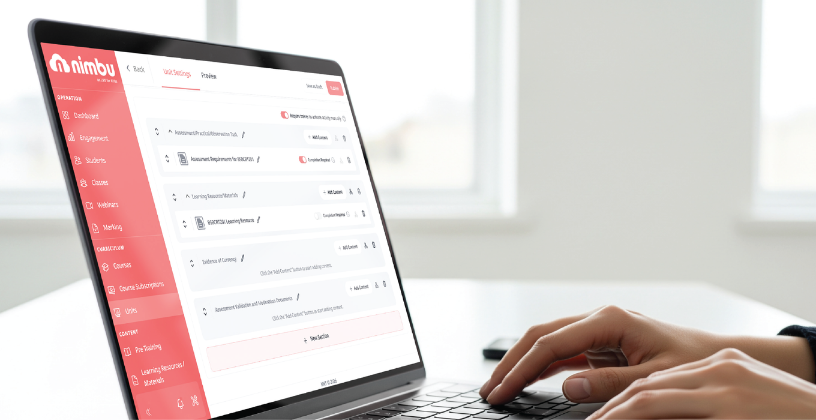
A modern online training system should include:
- Structured Learning Journeys
- Mobile-responsive Microsites
- Marking Dashboard
- Learning Progress Summary
- Practical Observations
- Unit Versioning
- Self-Served Courses
- Self-Marking Quizzes
- Integrated reporting
- AI-powered productivity tools
Nimbu also includes two AI assistants that support different parts of the training process.
Michi AI Assistant helps Content Editors create assessments, Practical Observations, quizzes, Pre-Training Reviews, learning materials, and articles from uploaded resources.
Michi Tutor Assistant supports students by generating flashcards, practice quizzes, and content summaries based on their course materials, helping them revise independently between trainer interactions.
Together, these capabilities support more efficient course management while improving the student learning experience.

6. How Do You Know It’s Time to Replace Your Training Delivery Software?
Every RTO is different, but there are common indicators that it may be time to evaluate a newer platform.
Consider reviewing your current training delivery software if:
- Staff regularly rely on spreadsheets alongside the LMS.
- Updating courses requires significant manual work.
- Students expect better mobile access than the current system provides.
- Reporting and administration consume increasing amounts of time.
- Trainers spend considerable effort creating repetitive learning resources.
- The platform receives limited product enhancements or innovation.
These indicators don’t necessarily mean your current system has failed, they simply suggest it may be worth exploring whether modern technology can better support the way your organisation operates today.
Modern Education Management Software Supports Continuous Improvement
The strongest education management software providers don’t simply maintain their platforms, they continue improving them.
Regular product updates, enhanced security, customer-driven improvements, AI capabilities, and practical workflow enhancements help ensure your LMS evolves alongside the vocational education sector.
Choosing a provider that continually invests in its platform helps protect your technology investment while giving your organisation access to new capabilities as training requirements change.

Modern Training Technology Supports Long-Term Success
Many Australian RTOs are reviewing their existing LMS because training delivery, student expectations, and operational requirements continue to evolve.
Modern training software Australia provides opportunities to simplify administration, improve student experiences, support trainers with practical workflows, and create a stronger foundation for future growth.
Rather than replacing technology for the sake of change, organisations are investing in platforms that help them deliver high-quality vocational education more efficiently.
Pricing starts from $850 per month and includes up to 500 student seats, giving Australian RTOs access to a purpose-built LMS designed specifically for vocational education. You can also use the Monthly Cost Calculator to estimate your subscription before speaking with the team.